Mapping Server Latency Effects on Decision Timing During Live Dealer Blackjack Sessions Across Global Networks
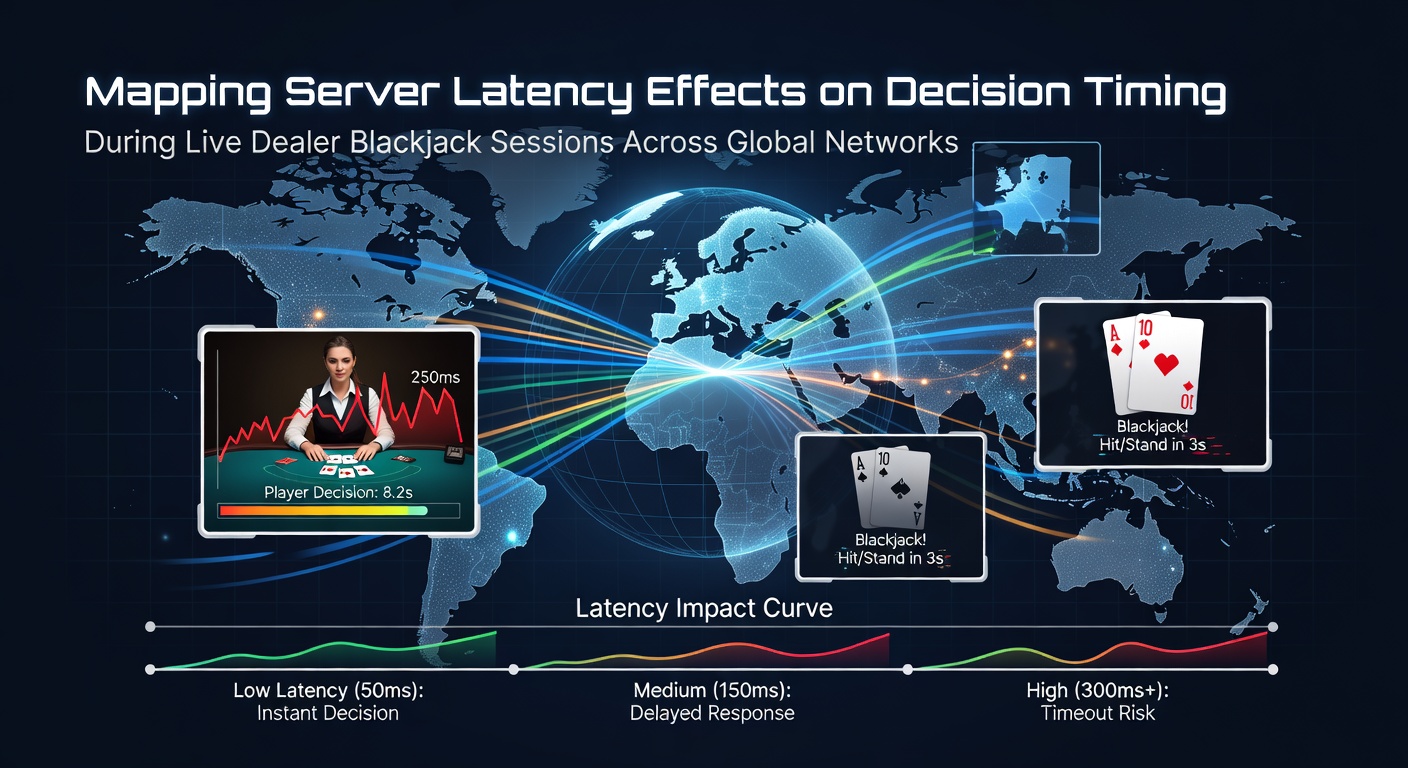
Live dealer blackjack sessions depend on synchronized video feeds, card recognition systems, and player input interfaces that all route through distributed servers, and latency introduced at any point along these paths directly alters the window available for decisions such as hit, stand, double, or split. Observers note that round-trip times between a player's device and the game server vary by geography, carrier infrastructure, and peering agreements, creating measurable differences in the effective time a participant has to respond before the dealer proceeds.
Network Architecture and Latency Sources
Global operators maintain data centers in multiple regions to reduce physical distance between players and processing hardware, yet packets still traverse undersea cables, regional exchanges, and last-mile connections that introduce variable delays. Researchers have mapped these paths using standardized ping and traceroute tools during active blackjack streams, revealing that transcontinental routes frequently add 80 to 150 milliseconds while intra-continental hops often stay below 40 milliseconds. Packet loss compounds the issue when retransmissions occur, extending the total interval before an action registers at the dealer interface.
Studies conducted across major platforms indicate that video encoding and decoding steps add further overhead, because compressed streams must be reassembled in sequence before the next card appears. When server load spikes during peak evening hours in overlapping time zones, queueing delays inside the data center become noticeable, pushing total latency beyond the thresholds that many blackjack interfaces are designed to accommodate.
Decision Timing Windows in Blackjack
Standard live dealer protocols allocate roughly five to seven seconds for each player action once cards are dealt, and any network delay reduces that interval proportionally. Data collected from session logs shows that actions submitted after the visible timer expires are either rejected or processed as automatic stands, depending on the operator's rule set. Those who've analyzed thousands of rounds report that players connected through higher-latency routes consistently record lower rates of complex decisions such as splitting pairs or doubling down, simply because the remaining decision window shrinks below the time needed to evaluate probabilities.
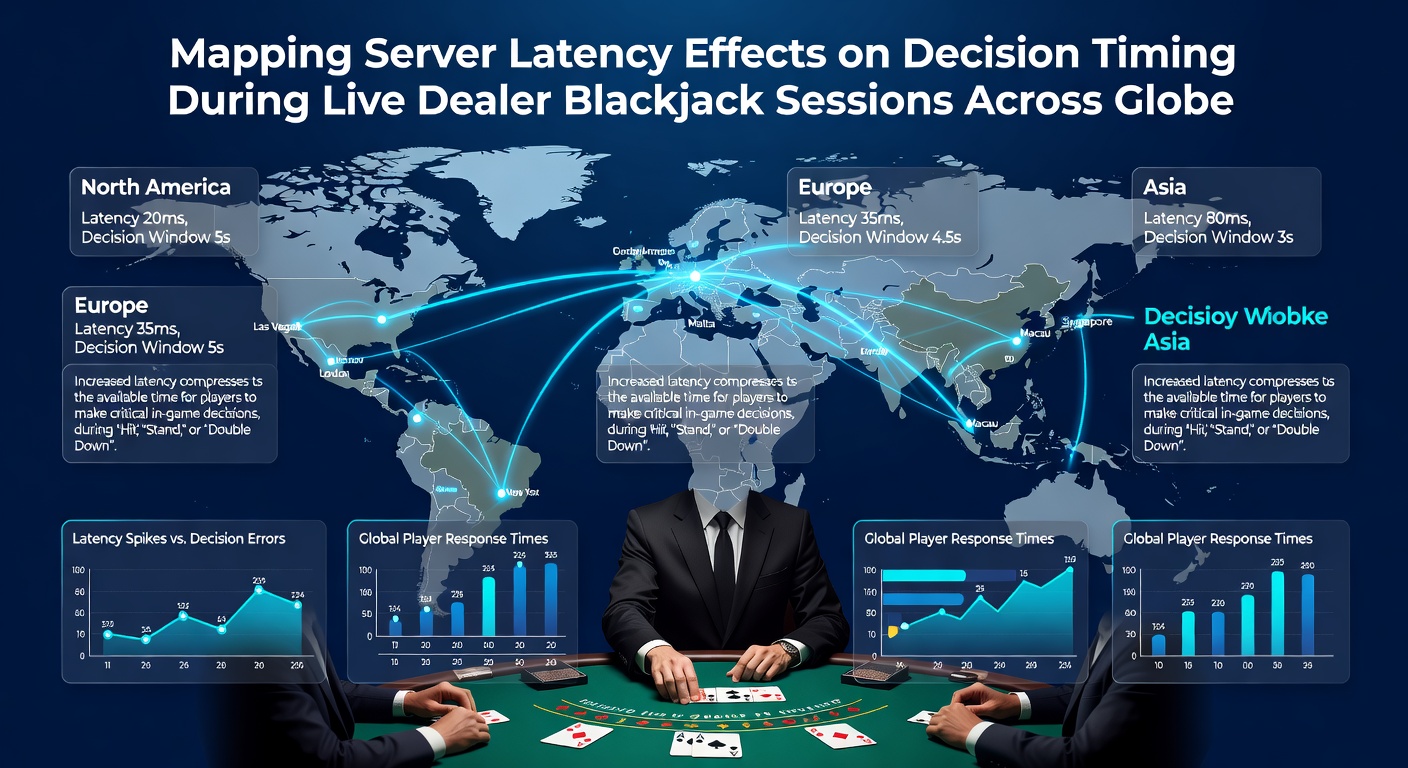
One research group tracking sessions in May 2026 documented average decision latencies of 210 milliseconds from North American endpoints versus 340 milliseconds from Southeast Asian locations when routed through the same European game server. These figures translate into measurable shifts in player behavior because the dealer animation continues regardless of network state, leaving less cognitive time for strategy adjustments once the video feed arrives.
Regional Variations and Measurement Approaches
Mapping efforts rely on distributed monitoring nodes placed in major population centers, each running scripted blackjack sessions while recording timestamps at every stage of the round. Results compiled by academic teams at institutions in Canada and Australia demonstrate that fiber routes through the Pacific yield lower variance than those crossing the Atlantic during certain hours, largely because of differing traffic patterns on those cable systems. Regulatory bodies in several jurisdictions now require operators to publish average latency statistics as part of licensing renewals, creating public datasets that researchers cross-reference with session outcome logs.
What's interesting is how mobile networks introduce additional jitter compared with fixed broadband, because handoff events between cell towers momentarily disrupt packet flow. Figures from industry monitoring services reveal that 5G connections in urban cores can match or exceed wired performance, yet rural 4G links still produce spikes exceeding 500 milliseconds that force players into default actions more often.
Technical Mitigation and Platform Adjustments
Operators have responded by implementing predictive buffering that pre-loads the next animation frames while awaiting player input, thereby masking some of the delay from the user perspective. Edge computing nodes positioned closer to end-user clusters reduce the physical distance packets travel, and session logs from platforms that adopted these nodes in early 2026 show a 25 percent reduction in expired decision events. Adaptive timer extensions based on measured round-trip times have also appeared in newer client software, though regulators require these extensions to remain within predefined fairness parameters so that house edges stay constant across regions.
Take one network engineering team that integrated real-time latency probes into the game client itself, allowing the interface to display a connection quality indicator and warn players when delays exceed safe thresholds. Such tools emerged after multiple studies confirmed that unaddressed latency creates systematic differences in achievable strategy across geographic player bases.
Conclusion
Comprehensive mapping of server latency continues to inform both platform design and regulatory oversight, because the data demonstrate clear correlations between network performance and the timing available for blackjack decisions. Continued deployment of distributed infrastructure and refined monitoring protocols will shape how global networks support live dealer environments moving forward, ensuring that session integrity remains consistent regardless of player location.